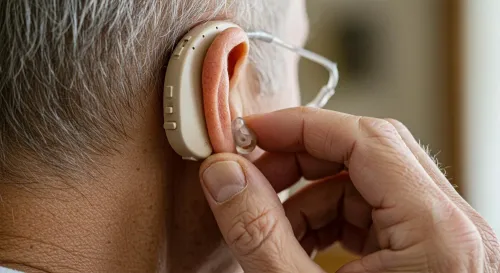
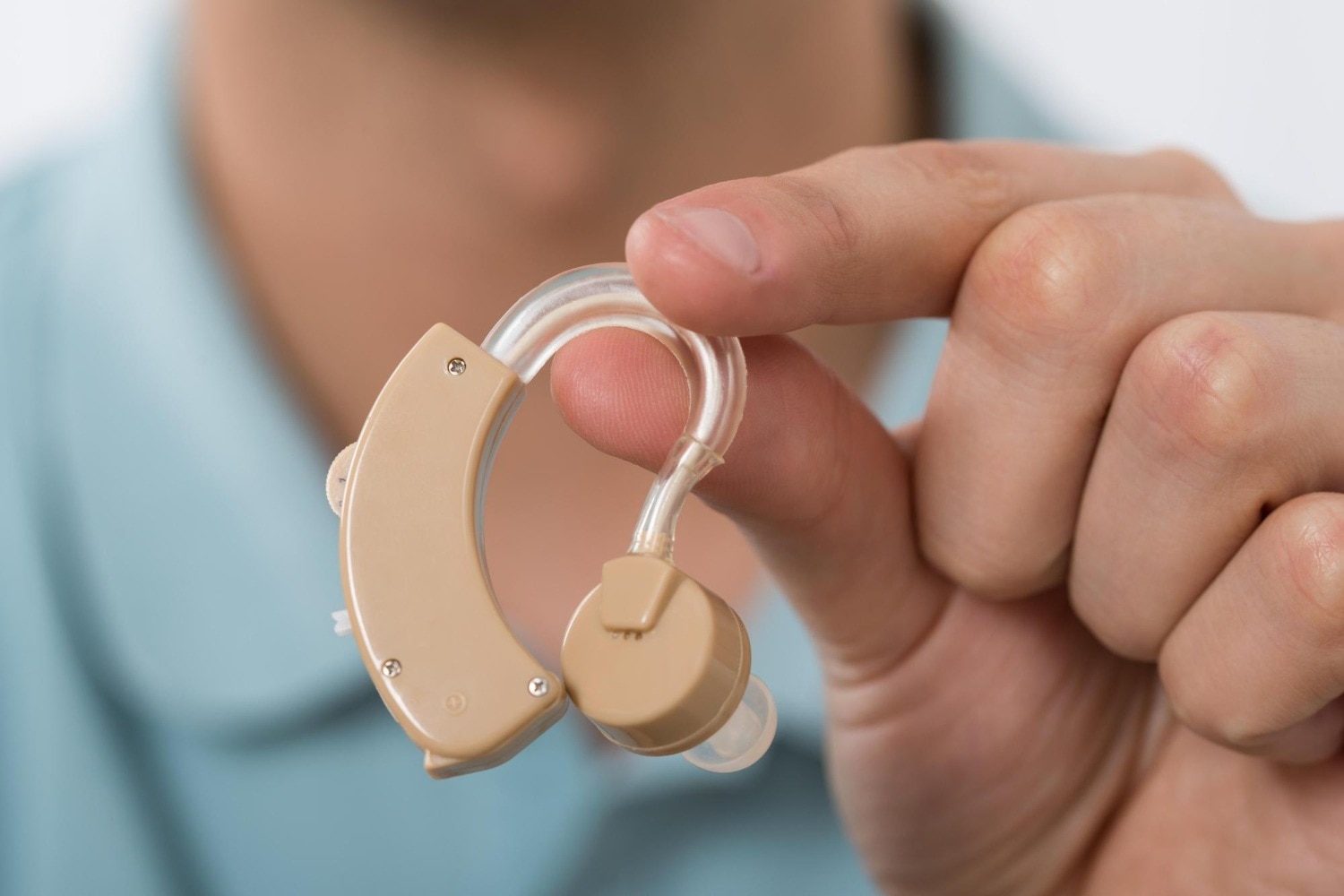
A hearing aid can feel comfortable and still deliver too little, too much, or poorly balanced amplification. By understanding fitting checks, real-ear verification, adjustment periods, cleaning limits, repair warning signs, and follow-up needs, you can judge whether your hearing care is supporting useful daily listening rather than merely supplying a device.
Key takeaways
- Ask for real-ear measurement, not comfort-based placement alone.
- Test speech understanding in quiet and noisy everyday settings.
- Clean earmolds, domes, and microphone ports only as instructed.
- Book repairs when sound cuts out, distorts, or moisture enters the device.
What Happens During a Proper First Hearing Aid Fitting
A proper first hearing aid fitting decides more than which device matches an audiogram. The audiologist must match amplification, acoustic coupling, physical controls, and your listening needs before regular wear begins.
1. Review the audiogram, speech understanding, hearing in each ear, and the situations where you struggle most, such as conversation, television, work, or noisy restaurants.
2. Select the fitting formula and receiver selection for the degree and pattern of hearing loss. The choice between ear moulds and domes affects retention, sound delivery, occlusion, and access to natural sound.
3. Complete gain programming for speech and everyday sounds, then set volume controls, listening programs, and other controls you can operate confidently.
4. Check feedback control while you speak, move, and listen. Whistling can indicate an unsuitable coupling, poor placement, blocked tubing, or settings that need adjustment.
5. Inspect the ear and device, confirm that the coupling sits securely, and test wearing comfort. The aid should not cause pain, pressure, persistent irritation, or an unnaturally blocked voice.
6. Explain adaptation and safe use, including how long to wear the aid initially, how to insert and remove it, and when to return. Amplified footsteps, dishes, fans, and your own voice can sound too loud at first, so gradual wearing time and fine-tuning often follow the first hearing aid fitting.
The first-day setting is not automatically the final setting. Return if speech remains unclear, sounds are uncomfortably loud, or the aid slips or whistles.
Why Real-Ear Measurement Matters More Than Comfortable Placement
A hearing aid that feels comfortable can still be too quiet for speech or too loud at particular pitches. An audiologist uses real-ear measurement, also called probe-microphone verification, to measure the sound level produced inside your ear rather than judging the fit by comfort alone.
The audiologist places a thin probe tube near the eardrum while you wear the hearing aid. The system measures output across frequencies and compares it with targets calculated from your hearing test, chosen fitting formula, and listening needs.
Tests at soft, conversational, and loud input levels show whether speech frequencies receive enough gain without creating excessive amplification.
Manufacturer-prescribed fitting settings provide a calculated starting point, not proof that the prescribed sound is reaching your ear. Hearing aid gain verification can expose a device that appears correctly programmed but under-amplifies high-frequency speech sounds or over-amplifies bass sounds. A second measurement after adjustment confirms whether the change solved the problem.
The results can lead to specific changes:
- Increase or reduce gain at selected frequencies.
- Change the receiver, dome, or earmould if the acoustic coupling is wrong.
- Alter maximum output or feedback control when amplified sound is uncomfortable or whistles.
Ask whether probe-microphone results were checked against your targets. Without that measurement, the device may be sitting securely while delivering unsuitable amplification, even if voices sound clearer during a brief conversation.
How to Tell Whether the Fit Works in Daily Listening
Speech in quiet that remains unclear after a reasonable hearing aid adaptation period points to programming or fitting trouble, not simply unfamiliarity. If speech is clear but conversation in noise collapses, the aid may need noise-management changes and you may need communication strategies; amplification cannot remove every competing sound.
| Experience | What it suggests | Next step |
|---|---|---|
| Speech in quiet sounds sharp or too loud | Gain needs fine-tuning | Ask for softer high-frequency or overall settings |
| Your own voice sounds boomy, hollow, or echo-like | The coupling is too closed, or the vent is unsuitable | Review the dome, earmold, or receiver |
| Whistling occurs during speech, chewing, or hugging | Sound is leaking, the aid is loose, or wax is blocking the path | Check placement, then request a physical-fit inspection |
| Telephone use produces feedback or muffled speech | The microphone, phone position, or program needs adjustment | Try the recommended receiver position and request telephone programming |
| Television listening stays unclear while volume rises | Speech audibility or compression is poorly matched | Bring a typical programme or viewing example to fine-tuning |
| Outdoor hearing feels overwhelming or unsafe | Wind protection or environmental settings need review | Request an outdoor program and test it outside |
Persistent headaches, ear soreness, pressure, or a hearing aid that shifts indicate a physical-fit problem or excessive output, not a challenge to endure. Remove it and arrange review if discomfort continues. Return promptly for a hearing test if one ear changes suddenly, speech becomes newly distorted, or useful sound disappears despite cleaning and fresh batteries.
A follow-up visit should compare these real listening experiences with your settings, rather than judging fit by comfort alone.
What You Can Clean at Home and When a Repair Visit Is Necessary
Clean only the parts your manufacturer identifies as user-serviceable. Safe hearing aid cleaning means removing visible debris with a cleaning brush, wiping the case with a dry cloth, and checking microphone openings, wax filters, and the sound outlet without pushing tools inside. Replace a wax filter or dome only if your device instructions show how.
- Use a wax loop to lift debris from an earmold or dome; do not force it into the receiver.
- Place the device in a drying cup overnight, or use an electronic dryer approved for that model.
- Keep moisture away from microphones and receivers. Never immerse the hearing aid, spray it with cleaner, or use household solvents.
- Inspect tubing for cracks, stiffness, or blockages. Damaged tubing needs replacement rather than glue.
Reduced output has different causes, and a service visit separates them:
| Sign or symptom | What it may indicate | What to do |
|---|---|---|
| Weak or intermittent sound | Blocked sound outlet, wax filters, microphone openings, moisture, or depleted battery | Clean, dry, and replace the battery or filter; book service if output stays low |
| No improvement after cleaning | Failed receiver, microphone, amplifier, or damaged tubing | Arrange a repair inspection; a replaceable part may restore output |
| New muffled hearing in one or both ears | Earwax blockage or a change in hearing | Request an audiologic or medical evaluation |
| Ear pain, drainage, sudden hearing change, severe dizziness, or rapidly worsening hearing | A medical problem rather than routine device dirt | Stop relying on troubleshooting and seek prompt medical care |
Why Ongoing Service Determines Long-Term Hearing Aid Value
A hearing aid’s value depends on what happens after fitting, not only on the purchase. Long-term hearing aid care should include hearing follow-up that reviews comfort, daily use, difficult listening situations, ear condition and device condition.
It should also compare later hearing tests with the original baseline and provide programming adjustments when hearing or communication needs change.
Ask a provider how continuing care handles:
- Inspection and replacement of replaceable domes, wax guards, receivers, earmoulds, tubing, vents and microphone covers.
- Battery checks, rechargeable systems, charging contacts and moisture-related faults.
- Safe cleaning and drying instructions matched to your device; never immerse it or use household solvents.
- Hearing aid repairs, with a clear process for testing whether reduced output comes from wax, moisture, a blocked outlet, a depleted power source or a failed component.
Provider access matters because a blocked receiver or damaged tubing can mimic a dead hearing aid. Mukund Speech And Hearing Center is worth assessing by asking whether its service team can perform these checks and arrange programming adjustments rather than only sell the device.
| Provider option | What follow-up access means | When it works |
|---|---|---|
| Sales-only seller | Supplies the device but sends you elsewhere for testing and repairs | Only if you already have a trusted audiologist |
| Remote support only | Offers phone or app guidance without routine physical inspection | Minor setting questions, not blocked parts or ear concerns |
| Local sales and service clinic | Provides hearing follow-up, cleaning, parts replacement and repairs | Best when you need accessible, ongoing care |
Before buying, ask for the follow-up schedule, service charges, repair turnaround, loan-device policy and who will handle care if the original fitter is unavailable.
Related products
ReSound hearing aids Your hearing experience should address your unique needs. ReSound's ecosystem of hearing aids, wireless accessories and apps help you to hear and... View product → |
BTE hearing aids ₹20990 Hearing aids have come a long way since the first bulky behind-the-ear models from the 1960s. View product → |
Frequently asked questions
What happens during a proper first hearing aid fitting?
The audiologist matches amplification to your audiogram, selects suitable acoustic coupling, programs controls, and checks the device while you wear it.
Why does real-ear measurement matter for hearing aids?
Real-ear measurement verifies the sound level reaching your eardrum, helping the audiologist adjust amplification instead of relying only on comfort or software estimates.
How can you tell whether a hearing aid fit works in daily listening?
Assess speech understanding in quiet and noise, comfort during extended wear, feedback, own-voice quality, phone use, and ease of handling.
What hearing aid cleaning can you do at home?
Follow the manufacturer’s instructions to wipe the device, clean replaceable domes or earmolds, and clear microphone openings with the supplied tools. Arrange service for distorted sound, repeated feedback, moisture, physical damage, or intermittent operation.
Related products
Power BTE Hearing Aid ₹8990 Type Visible Aid Placement Behind the ear No. Of Channels 6 Connectivity Wireless Battery Current 1.45 V Weight 60 gms Reference Test Frequency 3800... View product → |
Super Power BTE Hearing Aids Type Visible Aid Placement Behind the ear No. Of Channels 8 Connectivity Wireless Weight 60 gms Reference Test Frequency 4000 Hz Material Plastic... View product → |
Phonak Audio P 30 RIE Aid Placement P30, P50, P70,P90 Number of Channels 12 Type RIC Directional Microphones Omni drectional Model Name/Number Phonak Paradise product... View product → |
Grey RIC Hearing Aid Aid Placement RIC Type Visible No. Of Channels 12 Connectivity Wireless Material Plastic Power Source Battery Colour Grey Battery Voltage 1.45 V View product → |