The brand name is only a starting point: the right choice depends on your hearing-loss pattern, the physical fit, the features you will actually use, and the quality of verification and follow-up. By the end, you will have a practical checklist for comparing Oticon with Siemens/Signia and testing the proposed device before accepting it.
Key takeaways
- Confirm the exact Siemens model before comparing it with an Oticon hearing aid.
- Match power and style to your audiogram, ear anatomy, and daily listening needs.
- Test speech understanding, comfort, controls, connectivity, and battery costs during the trial.
- Require programming from your audiogram rather than accepting the manufacturer’s first-fit settings.
Confirm Which Siemens Model You Are Actually Comparing
Siemens hearing aids are now associated with the Signia brand, but the Siemens to Signia brand transition does not make every older model identical to a current Signia hearing aid. Treat a Siemens name as a starting point, not as a complete specification.
Ask for the exact model number, technology level, release generation, style, receiver strength, and included accessories. A label such as “Pure” or “Motion” identifies a product family, not the full performance package.
Request the manufacturer’s specification sheet and confirm the current Signia model claimed as its successor; do not accept “equivalent” without comparing the written details.
| Comparison point | Oticon hearing aids | Signia hearing aids or older Siemens hearing aids |
|---|---|---|
| Sound processing | Compare the named processing platform, speech features, and adjustment range | Compare the exact Signia platform or Siemens generation, not the brand name |
| Physical design | Check RIC, BTE, power BTE, or custom style and receiver options | Check the same style, receiver power, dome or earmold, and moisture protection |
| Controls and power | Confirm buttons, app controls, rechargeable operation, or disposable batteries | Confirm the same details; older Siemens models may use different chargers or batteries |
| Connectivity | Test your actual phone and operating-system version for streaming, calls, app control, and two-device pairing | Verify each function for the exact model; “Bluetooth” alone proves nothing |
| Support | Confirm local fitting, repairs, parts, and programming access | Confirm whether Siemens parts remain available and who supports the Signia successor |
Choose by documented features, fitting access, and expected daily use—not reputation.
Match the Hearing Aid to Your Audiogram and Ear Anatomy
A proper hearing aid audiogram match starts with the type, degree, and pattern of loss—not the logo. Confirm whether you have conductive hearing loss, sensorineural hearing loss, or mixed loss; whether loss is mainly low- or high-frequency; and whether one or both ears need amplification.
Speech discrimination results also matter: poor scores can limit clarity even after volume is increased.
Check these points with the proposed device and fitting:
| Check | Oticon | Siemens/Signia |
|---|---|---|
| Audiogram match | Select a model whose receiver and output cover your thresholds | Confirm the specific Signia model, not just the former Siemens name |
| Speech discrimination | Ask whether processing and programming support your tested speech scores | Ask the same question for the exact technology level |
| Ear anatomy | Match the receiver, dome, or earmold to canal size and feedback risk | Use the same physical-fit assessment; brand reputation cannot correct a poor seal |
| One or two ears | Verify appropriate binaural or single-ear programming | Confirm the model supports the required configuration |
Open or vented domes reduce plugged-up sensation and preserve natural low-frequency sound, but they deliver less usable gain. Substantial low-frequency loss may require a closed dome, earmold, or power BTE; chronic drainage can make an in-ear aid unsuitable.
Small canals, limited dexterity, or severe-to-profound loss can also shift the choice toward a power BTE rather than a CIC or RIC.
Request probe-microphone real-ear verification against prescriptive targets, especially after changing brands, receivers, domes, or earmolds. Obtain medical evaluation before fitting if loss is sudden, rapidly worsening, strongly asymmetric, limited to one unexplained ear, or accompanied by vertigo or drainage.
Compare Power, Controls, Batteries, and Connectivity
Compare the exact Oticon and Siemens/Signia models for output, controls, power supply, and wireless functions. A standard power hearing aid is not interchangeable with a super power hearing aid or power BTE; a RIC hearing aid may offer a smaller fit but less output for substantial loss.
| Check | Oticon proposal | Siemens/Signia proposal |
|---|---|---|
| Power and style | Maximum output, receiver strength, and whether it is a RIC hearing aid, standard power hearing aid, or power BTE | The same figures and style; confirm whether a super power hearing aid is required |
| Controls | Physical volume and program buttons, remote-control options, and app functions | The same controls; small buttons can be difficult with limited dexterity |
| Battery | Rechargeable or disposable, operating time during streaming, charger included, and backup plan | Confirm these details, including disposable batteries during travel or outages |
| Connectivity | Test Bluetooth streaming, hands-free calling, app control, and two-device connection | Test every function on the same phone and operating system |
| Ownership | Receivers, charger, batteries, accessories, repairs, and follow-up fees | Compare the complete costs, not only the device price |
Bring your actual smartphone to the demonstration—for example, an iPhone 15 running iOS 18—and test calls, music, notifications, and switching between two devices. “Bluetooth enabled” does not guarantee every advertised function.
Ask these questions before choosing:
- How many hours remain after a normal day of streaming?
- Can the charger travel safely, and what happens during a power outage?
- Are remote microphones or proprietary accessories necessary for your routine?
- Who supplies replacement receivers and paid programming after the fitting?
Require a Verified Fitting, Not Just a Manufacturer First Fit
Do not decide that an Oticon or Siemens/Signia aid works until its output has been measured in your ear and adjusted to your hearing targets, not merely loaded with the manufacturer’s first-fit settings.
1. Ask for probe-microphone verification, also called real-ear measurement. The audiologist places a thin tube beside your eardrum, measures amplified sound across frequencies, and compares it with prescriptive targets based on your audiogram. This matters especially after changing brands, receivers, domes, or earmolds.
2. Confirm that the proposed dome or earmold provides enough seal and usable gain. Open or vented fittings can reduce plugged-up sensation, but they leak amplification and may fail when you need substantial low-frequency gain.
3. Test comfort, speech clarity, own-voice quality, and loudness at soft, moderate, and loud inputs. Persistent booming, discomfort, weak speech, or harsh sound calls for programming and physical checks—not simply more volume.
4. Require feedback testing and a follow-up plan. Ask how many programming visits are included, who handles wax or moisture problems, and which receivers, filters, batteries, or chargers you can replace safely. Adaptation often takes more than one visit.
Mukund Speech And Hearing Center should document these measurements and adjustments in your fitting record, so you can compare results rather than brand claims. If hearing loss is sudden, rapidly worsening, strongly asymmetric, accompanied by vertigo or drainage, or unexplained in one ear, obtain medical evaluation before a routine hearing aid fitting.
Related products
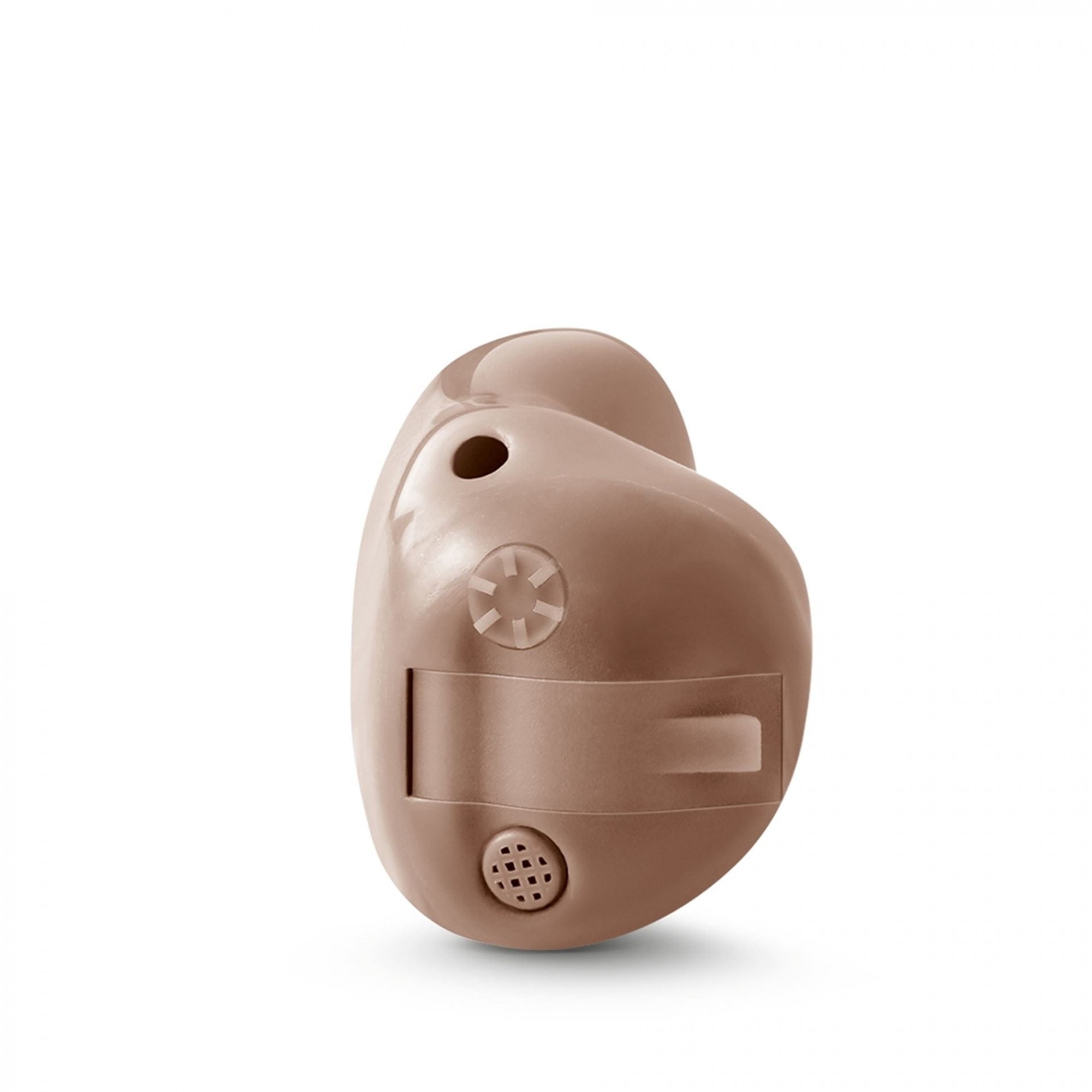 | Intuis 3 Custom ₹31990 Intuis 3 family Proven technology, outstanding comfort. It’s the simple things in life that are the most extraordinary. View product → |
 | Signia Kit Styletto 1IX ₹69990 emerges as an advanced hearing aid designed for individuals who value both exceptional hearing performance and sleek aesthetics. View product → |
Use the Trial Period to Test Speech, Comfort, and Total Cost
A hearing aid that sounds acceptable in a clinic can fail at dinner, in a meeting, or on the telephone. Use the hearing aid trial period to test speech, comfort, handling, and the full ownership cost before accepting the fitting.
Before paying, get the hearing aid return policy and these terms in writing:
- Trial start and end dates, including whether the period begins at fitting or delivery
- Restocking charges and the exact amount refunded after return
- Warranty length and what the warranty excludes
- Loss-and-damage coverage, deductible, and claim deadline
- Hearing aid repair support, including who handles repairs and expected turnaround
- Included follow-up visits, programming adjustments, and fitting fees
- Your ownership status if the device is financed, rented, or returned
Use the aid in the places that motivated your purchase. Ask for speech in noise testing when restaurant conversation or group meetings matter, then compare that result with your own experience.
Bring the actual smartphone and operating-system version you use; Bluetooth streaming, hands-free calling, app controls, and two-device connection depend on the specific aid and phone.
Keep a short daily record of speech clarity, own-voice booming, feedback, soreness, battery or charging performance, and listening effort. Ask for physical and electroacoustic checks when problems persist; simply raising volume can make comfort and feedback worse. Add every paid accessory, battery, charger, repair, and follow-up fee to the total cost before deciding.
Frequently asked questions
How do I identify the Siemens hearing aid model I am comparing?
Check the device label, charger or battery compartment, fitting software record, and purchase documents for the exact model name and generation. Siemens hearing aids are associated with the Signia brand, but older Siemens models are not identical to current Signia products.
How should an Oticon or Siemens hearing aid match my hearing loss?
Use your audiogram, hearing-loss configuration, required power, ear anatomy, and physical fit to choose the style and receiver. Your audiologist should verify that the selected device provides suitable output without uncomfortable loudness.
What should I compare besides sound quality?
Compare controls, battery or rechargeable operation, Bluetooth compatibility, accessories, app functions, repair support, and the recurring cost of batteries, chargers, and maintenance.
Why is a verified fitting important?
A manufacturer first fit is a starting setting, not proof that the device matches your hearing. Ask for programming from your audiogram and verify performance with speech testing, real-ear measurements, or both when appropriate.
What should I test during the hearing aid trial period?
Test speech in quiet and noise, comfort for full-day wear, telephone and streaming performance, handling of controls and batteries, feedback, and the total cost of ownership before deciding.
Related products
 | Intuis 3 SP ₹26990 Intuis 3 family Proven technology, outstanding comfort. It’s the simple things in life that are the most extraordinary. View product → |
ReSound hearing aids Your hearing experience should address your unique needs. ReSound's ecosystem of hearing aids, wireless accessories and apps help you to hear and... View product → |
 | Kit Styletto 2IX ₹164990 The Signia Kit Styletto 2IX Hearing Machine is a sophisticated, ultra-slim aesthetic with cutting-edge hearing technology. View product → |
 | Intuis 3 P Intuis 3 P ₹26990 Intuis 3 family Proven technology, outstanding comfort. It’s the simple things in life that are the most extraordinary. |