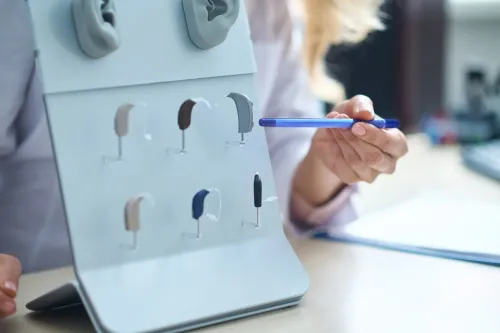
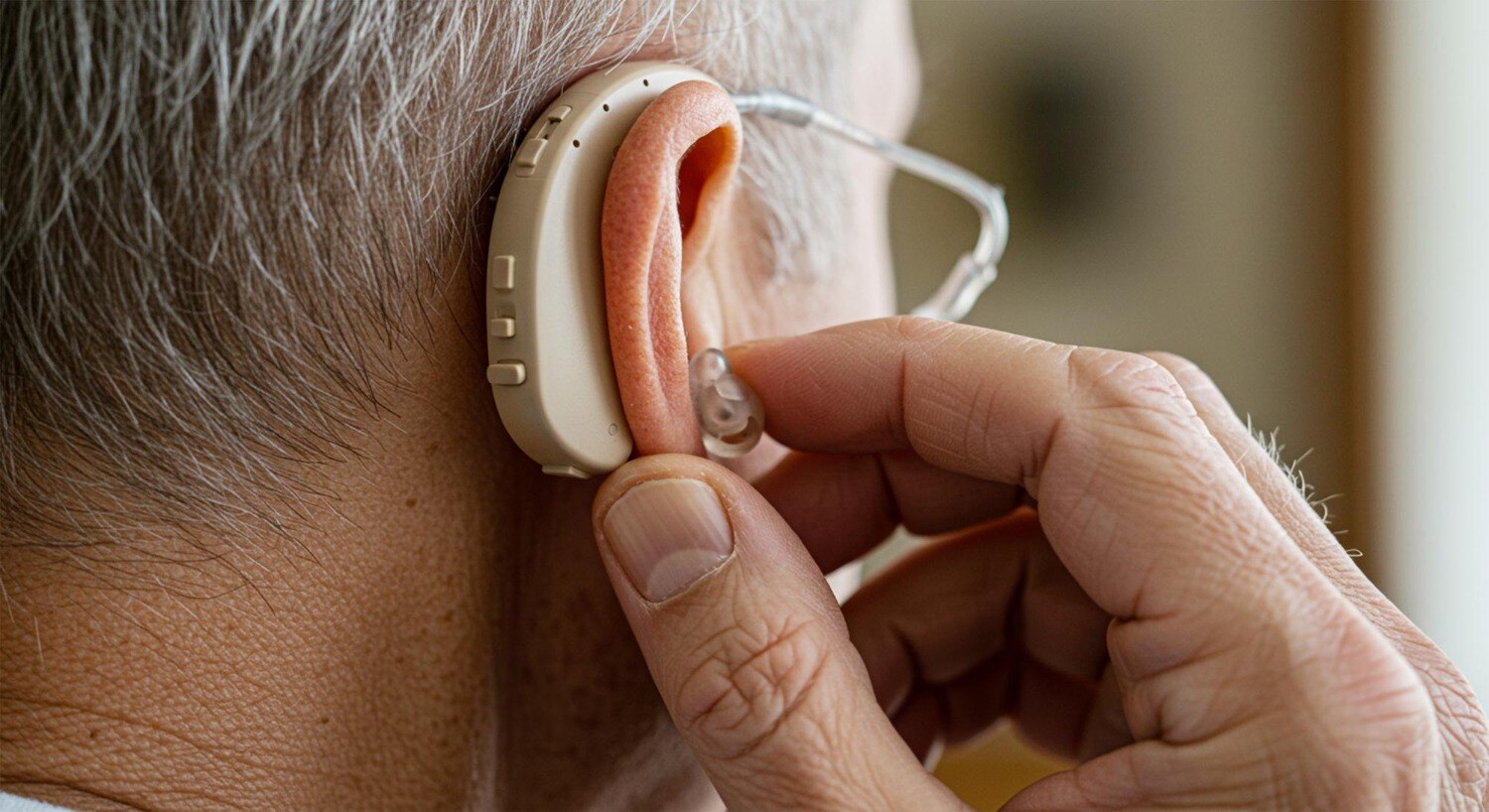
The daily challenge is not only hearing better; it is getting the devices powered, positioned, cleaned, and ready without a fiddly routine. By the end, you will know how charging works, how rechargeable models compare with zinc-air batteries, and which questions to ask before choosing one.
Key takeaways
- Place both hearing aids fully into the cradle before bed.
- Use contrasting labels or raised markers to identify each charging slot.
- Keep charging contacts dry and clean to prevent unreliable charging.
- Compare rechargeable convenience with the battery life and handling demands of zinc-air cells.
What a full charging routine looks like from evening to morning
For reliable rechargeable hearing aids charging, place each aid in its hearing aid charging cradle before bed, with the charging contacts fully touching the dock. Connect the cradle to mains power or its USB adapter, then check the hearing aid indicator lights: they should show that both aids have started charging.
Keep the cradle in one consistent, dry location rather than moving it between rooms.
- Wipe visible moisture from the aids and charger contacts with a dry cloth.
- Insert each aid in its marked left or right slot; do not force it if the light stays off.
- Confirm the cradle itself has power. A dock without its adapter connected cannot charge the aids.
- Leave the aids in place overnight and remove them in the morning only after checking that charging is complete.
The full charge time is often about three to four hours, but use the model’s instructions as the authority. Many rechargeable aids provide roughly 16 to 24 hours of listening from one full charge; streaming, Bluetooth calls, and frequent high-power noise processing reduce that time.
A low-battery warning gives you time to act, but the aids can eventually stop working during the day. A quick top-up may restore useful listening time, although the exact result varies by model.
Some charging cases store reserve power; others work only while connected to a socket or USB supply. Charge the case before travel, carry its cable and adapter, and plan a backup for power cuts or a forgotten overnight charge.
How to make the charger manageable with arthritis, tremors, or poor vision
The simplest setup for hearing aids for older adults is a charger kept in one fixed, well-lit place, such as a bedside table. Add a nonslip mat and a bright lamp; avoid moving the dock between rooms.
1. Mark left and right positions with large, high-contrast stickers or raised tape. Ask the hearing professional whether the aids have coloured or tactile markers, then use those markers every time.
2. Hold each aid by its larger body, not the thin receiver or wire. Lower it slowly into the matching slot until it sits level; never force it. Correct hearing aid placement in charger lets the hearing aid charging contacts meet the dock’s contacts.
3. Confirm charging before walking away. Look for the indicator light, listen for a start-up tone, or ask a family member to check the light if poor vision makes it unreliable. A phone camera can enlarge the indicator for some users.
4. If tremors make placement difficult, rest your wrist on the table and bring the charger to the aid rather than reaching toward a small slot. A dock with wide wells and strong magnets can be easier than a shallow cradle; ask to handle it before choosing.
5. Wipe the hearing aid charging contacts only as the device instructions direct. Keep pins and other sharp objects away.
Build this into the same hearing aid charging routine each evening. If either aid repeatedly fails to show a charging signal, have the dock, power cable, and contacts checked.
Rechargeable power compared with disposable zinc-air batteries
Rechargeable power removes the need to open the aid, peel a seal, or handle a loose cell every few days. That simplifies daily handling, especially when hand strength or vision is limited, but it creates one new obligation: return both aids to the dock consistently.
| Option | Daily handling | Backup and travel | Risk of running out |
|---|---|---|---|
| Rechargeable | Place the aids in the dock after use; no routine hearing aid battery replacement. | Bring the charging dock and confirm access to mains power or USB charging. Check the hearing aid charging case reserve power before a long journey or power cut. | A forgotten charge can leave you without hearing support during the day. A model with a charged case or power bank provides a recovery option. |
| Disposable zinc-air hearing aid batteries | Open the battery door, peel the sticker, wait briefly for activation, and insert the cell correctly. Carry and dispose of used batteries. | Pack spare zinc-air hearing aid batteries in their original packaging; they work without electricity. | Replace the cell when it runs low, including away from home, if you have a spare. |
Compare rechargeable versus disposable hearing aid batteries against your routine, not just convenience. Rechargeable aids suit predictable evenings near a charger; disposable cells suit travel without reliable electricity or anyone who frequently misplaces charging equipment. A built-in cell eventually loses capacity, and a manufacturer or hearing-care provider must usually replace it.
Include that service, charger replacement, and the purchase price in the long-term comparison.
Keeping charging reliable through moisture, debris, and battery ageing
A rechargeable hearing aid may stop charging because its contacts are blocked, wet, or no longer meeting the charger correctly. The built-in cell can also lose capacity with age, so the aid reaches full charge but lasts only part of the day.
Check these causes before assuming the charger or hearing aid has failed:
- Wax, skin oils, or dirt on the charging contacts
- Moisture from sweat, rain, condensation, or placing the aid in the dock before it is dry
- Debris inside the charging cradle
- An aid sitting crookedly, leaving its contacts misaligned
- A loose cable, failed power adapter, or unpowered charging dock
For cleaning hearing aid charging contacts, follow the manufacturer’s instructions and use the supplied brush or cloth. Do not push a pin, needle, or other object into the contacts or charging openings.
Good hearing aid moisture care means removing the aids before showering, wiping them after sweating, and drying them as directed; moisture resistance does not permit immersion.
Hearing aid battery ageing is gradual. A full charge provides fewer hours, and the aid may shut down before bedtime. Arrange a hearing aid battery replacement service through the manufacturer, hearing-care provider, or authorised service facility; owners cannot normally restore capacity by inserting a disposable battery.
Until service is completed, ask about a spare aid or a daytime charging plan.
When rechargeable convenience is worth discussing with a hearing professional
A rechargeable hearing aid is worth discussing when its power routine matches your hearing needs, schedule, and ability to manage the device. Start with hearing aid fitting, not the charging feature: the clinician should assess hearing thresholds, speech understanding, ear health, listening environments, and whether you need a high-power model.
High amplification or heavy streaming can use energy faster.
| Your situation | What to weigh | Rechargeable hearing aid decision |
|---|---|---|
| Mild to moderate loss and predictable home routine | OTC hearing aids, mild to moderate hearing loss, may suit some adults without complex fitting needs | Compare OTC convenience with professional programming |
| Severe, changing, one-sided, or asymmetric loss | Medical or audiological assessment matters more than battery type | Do not buy an OTC device first |
| Frequent travel, power cuts, or lost equipment | Access to electricity, a backup power bank, and charger storage | Choose rechargeable only with a realistic backup plan |
| Arthritis, tremors, or poor vision | Docking, indicator lights, cleaning, and handling | Test the charger and aid in person |
Ask how streaming, dexterity, and travel affect expected daily use, and include charger replacement and eventual built-in-cell service in the long-term cost. At Mukund Speech And Hearing Center, discuss whether the proposed model can be handled and supported in your routine.
Plan for hearing aid follow-up adjustment. Loudness, own-voice quality, feedback, earmold or dome fit, and hearing in noise often need changes; ear pain, drainage, sudden loss, or persistent feedback needs assessment rather than repeated volume increases.
Frequently asked questions
What does a full overnight charging routine involve?
Place both hearing aids in their cradle, confirm contact with the charging points, connect power, and check the indicator lights before bed.
How can people with arthritis, tremors, or poor vision manage a charger?
Choose a stable cradle with large, visible slots, add tactile markers, keep it within easy reach, and avoid small loose batteries.
How do rechargeable hearing aids compare with disposable zinc-air batteries?
Rechargeable aids remove daily battery changes and disposal, while zinc-air batteries provide replaceable power without requiring a charging cradle.
How can you keep hearing aid charging reliable?
Keep the contacts and cradle dry, remove debris with the manufacturer’s cleaning tool, and ask for service when charging time or battery life declines.
When should you discuss rechargeable hearing aids with a hearing professional?
Discuss them when handling small batteries is difficult, your daily routine suits overnight charging, or you need advice about power needs and battery ageing.