Choosing a hearing aid by brand, appearance, price, or another person’s success can leave you with the wrong amplification, poor speech clarity, or an unsuitable fit. By the end, you will know what an audiologist checks, how to read the important parts of the results, and why those findings determine the device and settings recommended for you.
Key takeaways
- Choose amplification from test results, not brand, appearance, or another person’s device.
- Read the audiogram for hearing-loss degree, frequency pattern, and ear differences.
- Use speech scores and daily listening needs to guide hearing aid features.
- Expect programming, real-ear verification, and follow-up after the recommendation.
Why a Hearing Aid Should Not Be Chosen Without Testing
A suitable hearing aid cannot be chosen from its brand, appearance, price, or another person’s recommendation because none reveals why you have hearing loss or how much amplification you can tolerate.
Impacted wax, infection, middle-ear fluid, an abnormal eardrum, or another medically treatable blockage can create a conductive loss where amplification is the wrong first step. Ear pain, discharge, sudden hearing loss, unilateral hearing loss, or rapidly worsening hearing needs medical or specialist assessment before routine fitting.
A hearing test before buying a hearing aid usually follows these steps:
- You discuss when the problem began, how it affects conversations, noise exposure, tinnitus, infections, dizziness, pain, discharge, and any sudden change.
- The clinician examines your ear and places headphones or insert earphones securely.
- You respond whenever you hear tones, even when they are faint. Consistent responses produce usable thresholds.
- You repeat spoken words or sentences so the clinician can measure speech understanding, not just tone detection.
- You take part in bone-conduction testing, using a small vibrator behind the ear. This helps separate outer- or middle-ear blockage from inner-ear loss.
- You report when sounds become uncomfortable. Do not force a response to a painful signal.
The findings determine whether you need medical referral, further investigation, one hearing aid, two hearing aids, or routine amplification. A familiar brand cannot identify the cause, and a lower price cannot show whether the device will provide enough gain without making loud sounds uncomfortable.
What the Audiologist Measures and How to Read the Audiogram
Pure-tone testing is only one part of a pre-fitting assessment. The audiologist first records when the problem began, whether it is worsening, tinnitus, noise exposure, medicines, ear infections, dizziness, pain, discharge, and the communication situations that matter to you. Sudden or one-sided loss requires attention before routine amplification.
- Otoscopy examines the ear canal and eardrum for wax, inflammation, fluid clues, or obstruction.
- Air-conduction testing uses earphones or insert earphones. Bone-conduction testing uses a vibrator behind the ear to separate outer- or middle-ear problems from inner-ear loss.
- Speech audiometry measures speech detection and how clearly you understand words.
- Tympanometry checks eardrum movement and middle-ear pressure.
An audiogram plots frequency in hertz across the horizontal axis, from low-pitched to high-pitched sounds. The vertical axis shows hearing level in decibels hearing level; marks lower on the chart represent a greater amount of hearing loss.
The right ear and left ear symbols on an audiogram are commonly red O for the right ear and blue X for the left, with extra symbols for bone-conduction or masked results.
| Pattern | What it means | Common implication |
|---|---|---|
| Conductive | Sound transmission is reduced in the outer or middle ear | Wax, fluid, or another treatable problem may need attention |
| Sensorineural | The cochlea or auditory nerve is affected | Amplification may be considered |
| Mixed | Conductive and sensorineural components coexist | Both medical assessment and amplification may matter |
Why Speech Scores and Daily Needs Change the Recommendation
Two people with similar pure-tone thresholds can receive different hearing aid recommendations because thresholds show only the quietest tones detected at selected frequencies, not how clearly speech is understood.
Speech audiometry adds speech-detection information and a word-recognition score. A low score limits expectations: amplification makes speech louder, but cannot fully repair distorted neural coding. Speech-in-noise testing shows whether competing voices, traffic, fans, or restaurant sound disrupt conversation despite similar tone results.
| Listening situation | What creates difficulty | Possible recommendation focus |
|---|---|---|
| Quiet one-to-one conversation | Access to soft speech | Clear audibility with comfortable gain |
| Classroom, group meeting, or religious service | Multiple talkers and distance | Directional microphones and noise management |
| Television, phone calls, or noisy outdoor settings | Competing sound and changing speech direction | Connectivity, program options, and adaptable processing |
Your routine is only part of the decision. Tinnitus and hearing aids require attention to comfort and sound-management features. Limited dexterity or vision can make tiny batteries, controls, and cleaning impractical; memory or cognitive limitations can complicate charging, insertion, and daily troubleshooting.
The ear itself also matters. Narrow canals, wax, discharge, and feedback risk can rule out a small fitting or require a different dome or earmold. An open fitting reduces the plugged sensation but provides limited low-frequency gain; a closed fitting improves control while increasing occlusion and feedback demands.
Copying a relative’s device or choosing the smallest style can therefore produce an unsatisfactory result.
How Test Results Determine the Hearing Aid’s Power and Design
The audiogram sets hearing aid gain by frequency, not as one overall volume increase. A person with relatively good low-frequency hearing and substantial high-frequency loss needs more high-frequency gain than low-frequency gain. The audiologist also sets a frequency response that provides speech audibility without exceeding the level you report as uncomfortably loud.
| Fitting decision | How test results guide it |
|---|---|
| Maximum output | Limits loud sounds so amplification does not become painful or unsafe. |
| Compression | Reduces the difference between soft and loud sounds when loudness tolerance is limited. |
| Bandwidth | Extends amplification into frequencies where hearing loss affects speech access. |
| Number of channels in hearing aids | Divides frequencies into regions so gain and compression can be adjusted separately. |
| Microphones and noise management | Speech scores and daily settings, such as quiet rooms or restaurants, guide directionality and noise reduction. |
| Receiver strength and number of aids | The degree and pattern of loss determine power needs; aidable loss in both ears can support two aids for access from both sides. |
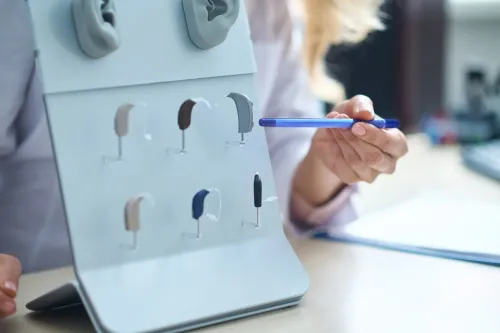
Physical fit also affects the recommendation. Ear anatomy, available canal space, wax, dexterity, vision, feedback risk, and required power can rule out an otherwise suitable style.
| Style or coupling | Practical effect |
|---|---|
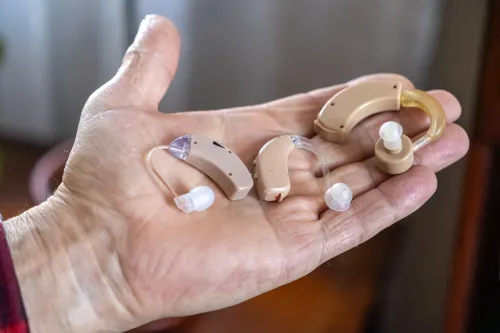
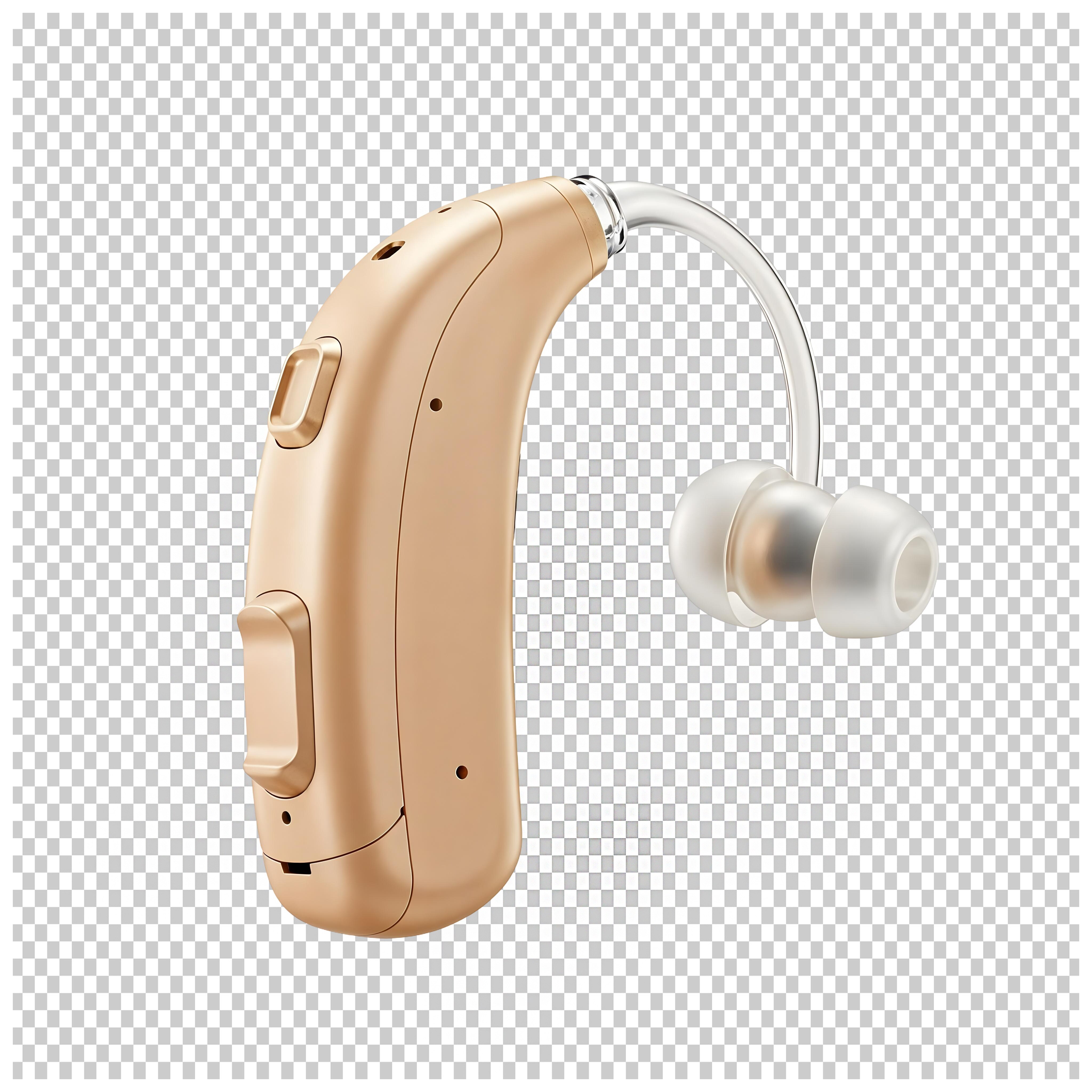
| Behind-the-ear | Accommodates higher power and varied earmolds. |
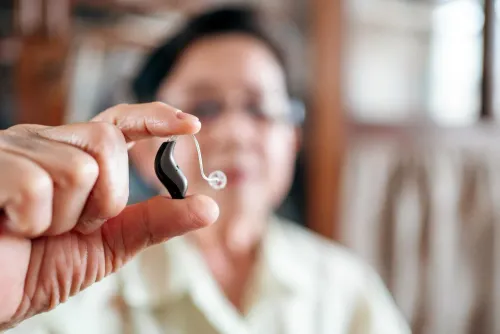
| Receiver-in-canal | Places the receiver near the eardrum while leaving the main body behind the ear. |
| Completely-in-canal | Offers a discreet fit but less space for power and controls. |
| Open dome | Preserves low-frequency natural hearing and reduces plugging, but supplies limited low-frequency gain. |
| Closed dome or earmold | Improves low-frequency control when gain is needed, while increasing occlusion and feedback-management demands. |
What Happens After the Recommendation: Programming, Verification, and Follow-Up
You can tell whether a hearing aid is doing its job by comparing its measured output with a prescriptive target, not by judging the manufacturer’s first-fit setting or how loud it sounds.
1. The audiologist programs gain across frequencies using NAL-NL2 or a DSL hearing aid prescription derived from your audiogram. This sets audibility targets for speech while limiting loudness.
2. During real-ear measurement, also called probe-microphone measurement, a thin probe tube sits near your eardrum. Speech or test signals pass through the hearing aid, and the audiologist measures the actual sound level in your ear.
3. In hearing aid verification, those levels are compared with the target. The audiologist adjusts gain, compression, maximum output, and frequency response when the aid under-amplifies speech or makes loud sounds excessive.
4. The fitting is checked for feedback, comfort, telephone use, handling, and the listening situations you described. A dome, earmold, vent, or ear-canal shape can change the result even when the programming looks correct.
5. Follow-up exposes problems that a first fitting cannot: poor tolerance, blocked wax, an unsuitable dome or earmold, difficult controls, or disappointing speech understanding. Ask what will be measured and adjusted at review appointments.
Mukund Speech And Hearing Center can provide the hearing tests, fitting, and ongoing support needed to follow this process in Nagpur. When comparing providers, ask whether they explain the audiogram, document speech results, perform real-ear measurement, and schedule adjustments rather than simply handing over a device.
Related product
 | Hearing Test ₹700 To konw type and degree of hearing loss View product → |
Frequently asked questions
Why should you have a hearing test before choosing a hearing aid?
Testing identifies the type, degree, and pattern of hearing loss and shows how much amplification you can tolerate. It prevents you from choosing a device that is too weak, too powerful, or unsuitable for your needs.
What does an audiogram show?
An audiogram plots the softest sounds you hear across frequencies in decibels hearing level. The results show whether hearing loss is mild, moderate, severe, or profound and whether the two ears differ.
Why do speech scores affect hearing aid recommendations?
Speech testing shows how clearly you understand spoken words at a comfortable level. Poor speech understanding can influence programming, microphone features, realistic expectations, and the need for additional communication strategies.
How does an audiologist choose hearing aid power and design?
The audiologist matches power to your hearing thresholds, speech results, ear anatomy, dexterity, listening environments, and handling preferences. The recommendation may include behind-the-ear, receiver-in-canal, or in-the-ear designs.
What happens after a hearing aid is recommended?
The audiologist programs the device, verifies its output against your prescription, checks comfort and speech audibility, and adjusts it during follow-up visits as you adapt.