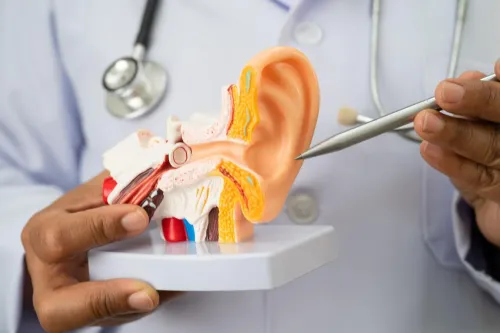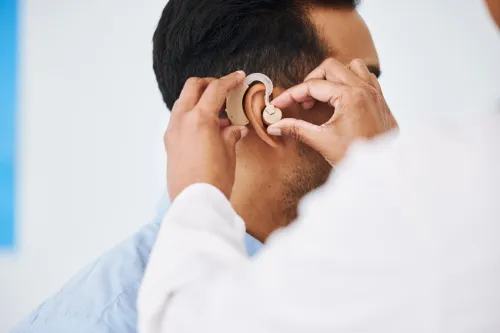
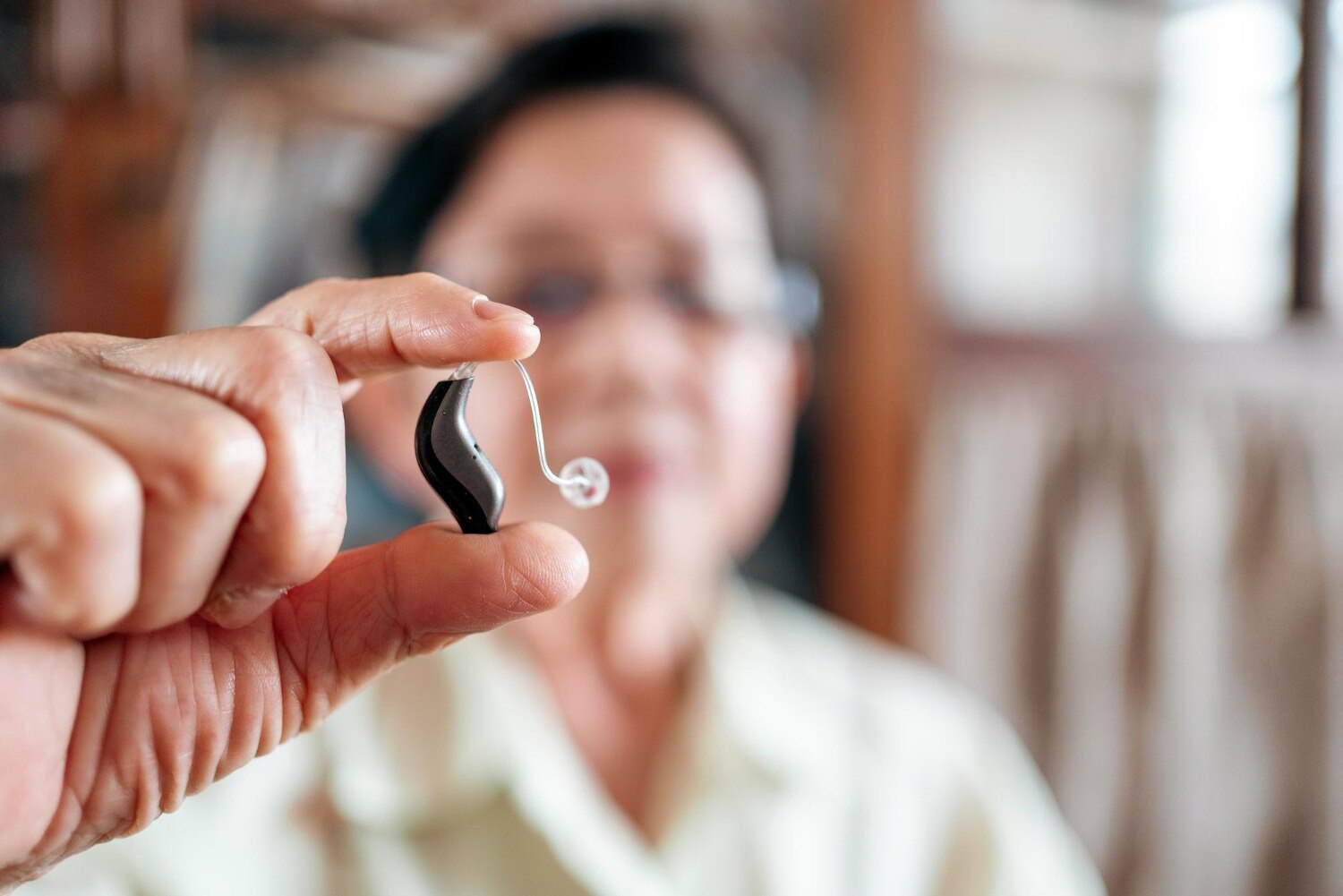
Digital hearing aids can make speech more audible by analysing sound, adjusting different frequency regions, and limiting uncomfortable loudness. To judge whether they are appropriate, you need to recognise the pattern of age-related hearing loss, complete the right hearing tests, and understand how fitting and follow-up affect real-world results.
Key takeaways
- Digital aids separate speech from noise before sending adjusted sound to your ear.
- Book a hearing test instead of assuming muffled speech is a normal part of ageing.
- Ask for real-ear verification to confirm the aid matches your prescription.
- Practise in difficult listening environments and return for programming adjustments.
How digital hearing aids turn sound into usable speech
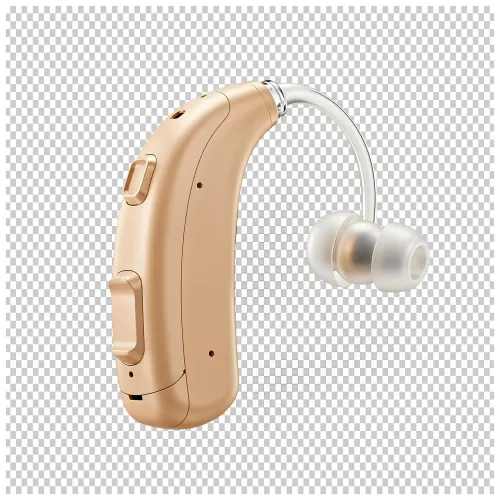
A digital hearing aid does not simply make every sound louder: it captures sound, analyses it, and applies different adjustments before sending it to your ear. The microphone converts sound waves into an electrical signal.
Digital sampling changes that signal into numbers, allowing the processor to separate frequency regions, increase speech sounds, reduce unwanted noise, and control loudness. The receiver converts the processed signal back into sound.
Think of the processor and receiver signal flowling? Sound follows a defined path:
- Microphone: captures voices, traffic, and other sounds.
- Processor: analyses the sampled signal and applies programmed gain, compression, feedback control, and frequency-specific changes.
- Receiver: delivers the adjusted sound into the ear.
Analogue amplification and digital hearing aid technology handle that path differently.
| Option | What it does | Main trade-off |
|---|---|---|
| Analogue amplification | Increases an incoming electrical signal in a broadly continuous way | Simple and immediate, but less programmable and less precise across frequencies |
| Digital processing | Converts sound to numbers, then adjusts frequency regions and loudness separately | Programmable and adaptable, but processing can introduce delay or sound unnatural when poorly fitted |
For age-related hearing loss, digital processing can add high-frequency gain for consonants such as s, f, and t while limiting loudness in already-strong sounds. It cannot repair damaged cochlear hair cells or remove reverberation, competing talkers, and every noisy-room problem.
Face the listener, improve lighting, reduce distance, or use a remote microphone when the room defeats amplification.
When age-related hearing changes need more than an assumption
A hearing test is worthwhile when everyday listening starts costing effort, not only when sounds seem faint. Presbycusis, the usual form of age-related hearing loss, develops gradually and often affects both ears. It commonly starts as high-frequency hearing loss, so voices may sound loud while their meaning remains unclear.
The speech consonants /s/, /f/, and /th/ carry fine detail that can disappear first.
Background noise exposes the problem. You may follow one speaker in a quiet room but lose words in a restaurant, meeting, or family group. Ask yourself whether you regularly:
- Ask people to repeat themselves, especially when they speak softly or turn away.
- Increase the television or phone volume beyond what others prefer.
- Struggle to follow group conversation or mistake similar-sounding words.
- Rely on lip-reading, avoid noisy gatherings, or feel unusually tired after listening.
| What you notice | What it suggests | What to do |
|---|---|---|
| Gradual difficulty in both ears | Possible presbycusis | Arrange a hearing test |
| One ear suddenly worsens | Not typical ageing | Seek prompt medical assessment |
| Ear pain, drainage, or blocked sensation | Possible ear condition | Arrange medical evaluation |
| Dizziness with hearing change | Possible inner-ear problem | Seek prompt medical assessment |
Do not treat sudden, rapidly worsening, or markedly one-sided hearing loss as a reason to buy amplification first. A clinician must check for causes that need treatment or specialist investigation.
Why testing and verification determine whether an aid helps
An audiogram is a map, not a prescription. Testing identifies the type and pattern of loss; verification checks whether the selected aid delivers useful sound at your ear rather than merely using its factory settings.
- Pure-tone audiometry measures the quietest tones you hear at different frequencies. Have both ears tested separately, because asymmetry can change the fitting plan and may require medical assessment before amplification.
- Speech audiometry measures how softly you detect speech and how accurately you repeat words. Poor word recognition can limit clarity even after volume is increased.
- Tympanometry checks eardrum movement and middle-ear pressure. An abnormal result can point to congestion, fluid, or another problem that hearing aids will not correct.
- The clinician adds your communication needs, dexterity, vision, tinnitus, ear-canal condition, and usual listening environments to the test results before comparing devices.
The audiogram then becomes settings for frequency-specific gain: more amplification at pitches where your thresholds are poorer, with compression controlling loud sounds. The first fitting is only a starting point. A real-ear measurement uses probe-microphone verification to compare sound near your eardrum with a prescriptive target, then the clinician adjusts gain, output, and compression.
Mukund Speech And Hearing Center can use this testing-and-verification process to distinguish a poor device choice from an aid that simply needs adjustment. Without verification, an aid can sound loud while leaving speech details inaudible.
Related items
invisible hearing aids invisible hearing aids Hearing aids have come a long way since the first bulky behind-the-ear models from the 1960s. |
BTE hearing aids ₹20990 Hearing aids have come a long way since the first bulky behind-the-ear models from the 1960s. View product → |
What hearing-aid features change in daily listening
Multichannel processing divides sound into channels covering different frequency bands. The aid can add more high-frequency gain for consonants while using compression to keep loud sounds comfortable; too much compression can make speech dull or reduce clarity.
- Directional microphones give priority to sound arriving from a chosen direction, such as a talker in front of you. They do not reliably separate that talker from every competing voice.
- Noise reduction changes gain for sounds classified as unwanted. Speech enhancement can increase the contrast of speech, but neither feature removes a crowded room.
- Sound classifiers identify situations such as speech, music, or noise and switch processing settings. Misclassification can produce a setting that feels unnatural or fails to improve understanding.
- Feedback cancellation detects the whistling loop between the receiver and microphone and reduces it. It cannot fix every cause of feedback, including a loose fit, wax, or a damaged tube.
- Wind-noise reduction limits low-frequency microphone noise outdoors. It does not restore speech buried under strong wind.
- Impulse-noise management softens brief sounds such as dishes clattering. Aggressive processing can also soften useful speech details.
A hearing aid modifies sound; it does not repair damaged cochlear hair cells or return hearing to normal. You can still struggle with overlapping talkers, reverberation, distance, or speech outside the fitting range. Face the listener, improve lighting, reduce room noise, and use a remote microphone when needed.
Making amplification work beyond the fitting appointment
If hearing loss affects both ears, choose binaural hearing aids unless a clinician identifies a medical reason to use one. Two aids improve access to sound from either side, help locate speakers, and reduce the head-shadow effect, but they cannot guarantee clear speech in every noisy room.
| Decision | Usually better choice | Trade-off |
|---|---|---|
| One or two aids | Two for hearing loss in both ears | Higher cost and two devices to maintain |
| Rechargeable versus zinc-air batteries | Rechargeable for easier daily handling | Charging becomes essential, and battery capacity declines with age |
| Support after fitting | Scheduled follow-up programming | Requires appointments, but catches problems that home use reveals |
Treat the adjustment period as training, not a test you must pass immediately. Increase wearing time gradually and practise in quiet settings; report discomfort, distorted sound, feedback, weak loudness, or poor speech understanding instead of tolerating them. Zinc-air batteries are widely replaceable, but humidity, temperature, storage, and small battery doors can create failures.
Communication strategies remain part of effective amplification. Ask conversation partners to face you, move closer, improve lighting, and reduce competing noise. A remote microphone can send a speaker’s voice more directly to your aids across a meeting table or classroom. Continue follow-up programming when particular places, telephone calls, or reverberant rooms remain difficult.
Frequently asked questions
How do digital hearing aids turn sound into speech you can understand?
The microphone captures sound, the processor analyses it, and the aid applies frequency-specific amplification before sending the signal to your ear.
When should age-related hearing changes be tested?
Arrange a hearing assessment when speech sounds unclear, conversations become difficult in noise, or you regularly ask people to repeat themselves.
Why are testing and verification important for hearing aids?
A hearing test identifies your hearing thresholds, while real-ear verification checks whether the fitted aid delivers the prescribed amplification in your ear.
Which hearing-aid features affect daily listening?
Directional microphones, noise reduction, feedback management, rechargeable batteries, Bluetooth streaming, and programme controls affect how an aid performs in different settings.
How can you make amplification work after the fitting appointment?
Wear the aids consistently, practise in quiet and noisy settings, keep them clean and charged, and schedule adjustments when speech remains unclear.
Related products
Super Power BTE Hearing Aids Type Visible Aid Placement Behind the ear No. Of Channels 8 Connectivity Wireless Weight 60 gms Reference Test Frequency 4000 Hz Material Plastic... View product → |
Itc Hearing Aids Aid Placement Behind The Ear Type Digital Brand Resound Noise Reduction Yes Model One 4ITC View product → |
Power BTE Hearing Aid ₹8990 Type Visible Aid Placement Behind the ear No. Of Channels 6 Connectivity Wireless Battery Current 1.45 V Weight 60 gms Reference Test Frequency 3800... View product → |
ReSound hearing aids Your hearing experience should address your unique needs. ReSound's ecosystem of hearing aids, wireless accessories and apps help you to hear and... View product → |